
Rotobrush Air Duct Cleaning in Issaquah: A Homeowner’s Guide
When a company’s first selling point is “we use Rotobrush,” that’s a bit like a mechanic leading with “we use a torque wrench.” The tool is real, and a good one. But the useful question isn’t which brand is printed on the machine. It’s whether the people holding it know when to reach for a different tool entirely. Rotobrush is a legitimate contact-cleaning system with a specific job it does better than almost anything else: flexible duct. It’s also the wrong choice for some of what we find in Issaquah homes.
Key Takeaways
- Rotobrush is a contact-cleaning method: a rotating brush loosens debris while a vacuum pulls it away.
- It shines on flex duct and does less well on rigid sheet metal, damaged runs, and heavily contaminated plenums.
- The duct material in your Issaquah home should decide the method, not the other way around.
- A real cleaning job starts with inspection and ends with a post-cleaning look, not a coupon and a wand.
How does the Rotobrush system actually work?
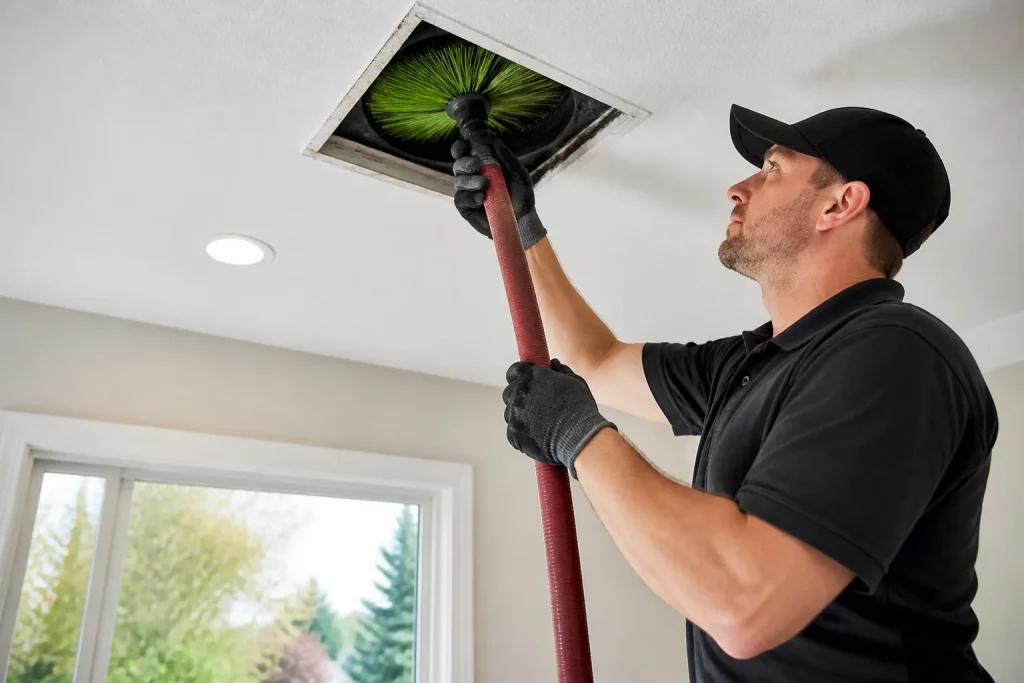
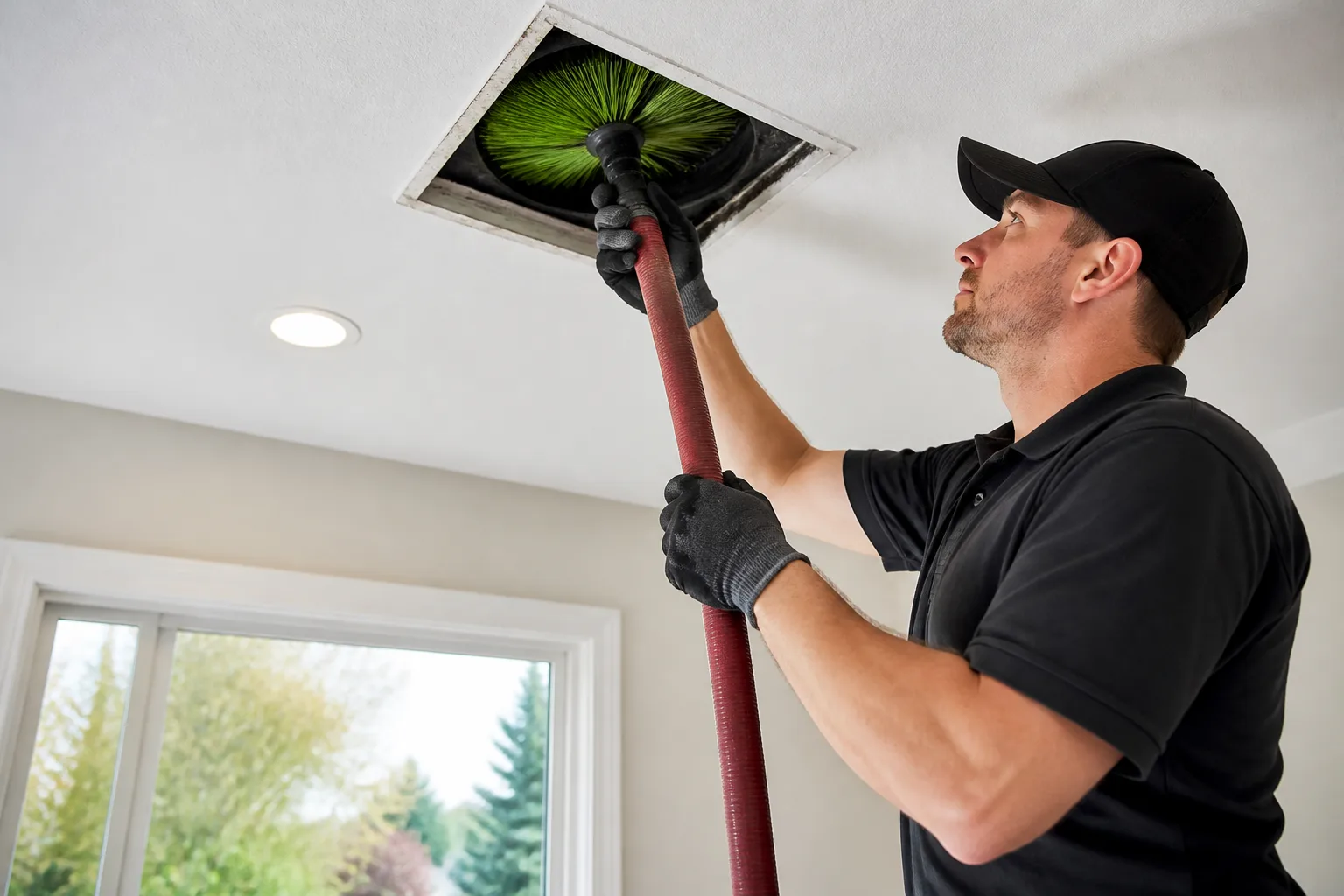
The Rotobrush is a rotating brush head on a flexible shaft, paired with a high-powered vacuum hose that runs alongside it. As the brush spins, it physically agitates the dust, lint, and debris stuck to the inside wall of the duct, and the vacuum captures what the brush knocks loose. Called contact cleaning, the idea is simple: you’re touching the dirt, not just pulling air past it.
That physical contact is the strength. A negative-pressure-only setup seals the system and draws air through it, which is effective for loose debris but doesn’t scrub a surface. Rotobrush reaches in and does. On flex duct, the brush follows the corrugations and clears the ridges where dust settles and clings.
What separates a real Rotobrush job from a marketing claim is the support equipment around it. A contact brush without strong containment just stirs dust into the room. We pair it with Nikro industrial HEPA vacuums and, when a job calls for it, Abatement Technologies negative-air equipment to hold the work area under containment. The tool matters. The system around it matters more. If you want the plain version of that full process, our air duct cleaning page lays it out step by step.
Where Rotobrush works best, and where it doesn’t
Rotobrush is genuinely excellent on flexible duct, which is most of what newer construction uses. It’s a solid performer on moderately soiled systems where the dirt is on the walls and the duct itself is sound. Where it struggles is where experience matters most:
- Rigid sheet metal runs: flat, hard surfaces need a different approach and often a different tool to get the corners and seams clean.
- Heavily contaminated plenums and returns: the larger, dirtier cavities near the air handler usually call for industrial vacuum work and containment, not a brush snaked through a branch line.
- Ducts with existing physical damage: a rotating brush in a torn or crushed flex run can make a small problem worse. Damage gets found and addressed first.
This is the honest part most equipment-branding pages skip. No single machine cleans every system well. A company that leads with one tool and stops there is telling you something about its process. In our experience across Issaquah, the method should follow the diagnosis, not precede it.
What duct materials will you find in an Issaquah home?
Issaquah sits at the base of the Cascades, and its housing stock follows the region: older homes closer to the historic downtown, newer construction spreading out through the surrounding neighborhoods and hillside developments. That split shows up in the ductwork.
- Newer builds commonly use flex duct for branch runs. Light, insulated, easy to route, and well suited to contact cleaning with a Rotobrush.
- Older homes more often have rigid sheet metal trunk and branch systems, sometimes with original seams and connections that need inspection before anyone runs a brush through them.
The wet side of western Washington matters here too. Long damp stretches keep indoor humidity up, and dust that settles in a duct over a damp season can clump and cling in a way dry dust doesn’t. That’s another reason contact cleaning earns its place in this climate: the brush gets the buildup that air alone leaves behind. But which runs need it depends entirely on what’s in the house.
Why a pre-inspection decides the cleaning method
A proper cleaning starts before any equipment comes out of the vehicle. The technician inspects the system, checks duct material and condition, looks at the air handler and plenum, and finds the access points the job will need. Only then does the method get chosen.
- Inspect duct material, layout, and condition, including any damage.
- Confirm and create the access points needed to reach every run.
- Set up containment and negative pressure so loosened debris can’t escape into living space.
- Clean with the method that suits the system, which may mean contact cleaning on flex branches and industrial vacuum work elsewhere.
- Inspect again after cleaning and show you what was done.
When the inspection turns up a seam that’s pulled apart or a flex run that’s torn, that’s a repair, not just a cleaning. We repair what we find, sealing ducts in the same visit rather than leaving you to chase a second contractor. That single-company accountability from intake to vent is the whole point. If the system also needs more than a clean, our HVAC cleaning covers the equipment and coil side.
What does a complete cleaning look like, whatever the method?
The method can vary. The standard doesn’t. A complete job has certain markers you can watch for:
- Access points opened where they’re needed and sealed back up cleanly.
- Containment and negative pressure in place during the work, verified, not just claimed.
- Post-cleaning inspection of the runs and the air handler area.
- Before-and-after photos of your ducts, so you see the result rather than take it on faith.
Beyond cleaning, a true full-system visit handles the connected pieces: clearing a lint-packed dryer vent cleaning job while the equipment’s already on site, sealing leaks, and offering air quality upgrades. When filtration or purification makes sense, we install Honeywell and Aprilaire products in the same appointment, and Guardsman-backed sanitizing rounds out the work with a documented treatment rather than a generic spray. You get one visit that covers the whole system. Rotobrush is one tool in that visit. The pre-inspection and the post-cleaning check are what make it count.
When should you call a pro?
Some signs of a duct problem are worth a professional look. If you notice visible dust streaks at the vents, a musty smell when the system starts, increased allergy symptoms that track with the HVAC running, or an unexplained jump in dust around the house, it’s time to have the system inspected. Likewise if you’ve had recent remodeling or a pest issue. If you’re in Issaquah and the question is whether your ductwork actually needs cleaning, that’s a diagnosis, not a guess, and it’s worth a professional set of eyes. Our team at Issaquah Air Duct Cleaning Pros is glad to take a look and give you a straight answer on what your system needs.
The Bottom Line
Rotobrush is a real, effective cleaning method, and it’s often the right one. It excels on flex duct and struggles on rigid metal, damaged runs, and heavily soiled plenums. Equipment brands tell you what a company owns. Diagnostics tell you whether they know how to use it. Don’t let a brand name substitute for a proper inspection. If you’re in Issaquah and need help, Issaquah Air Duct Cleaning Pros offers free estimates. Call (877) 792-6439 to book one.
Frequently Asked Questions
No, and that’s the honest answer. Rotobrush excels on flexible duct in newer Issaquah homes. It’s less suited to rigid metal systems, heavily contaminated plenums, and ducts with existing damage. The right method depends on an inspection of your specific system, not a single tool.
You can often tell by looking where a vent meets the ductwork, but the sure way is a professional inspection. Flex duct is common in newer construction; older homes often have rigid sheet metal. Knowing which you have tells you which cleaning method fits. Call (877) 792-6439 for a free estimate and inspection.
There’s no fixed schedule. It depends on your home, whether you’ve had remodeling or pets, and what you’re seeing at the vents. Visible debris streaks, musty odors, and dust that tracks with HVAC use are reasons to have the system inspected sooner rather than later.
Consumer-grade vacuums can’t reach or properly contain duct debris, and contact cleaning on a damaged run can worsen it. For a full-system result that includes inspection, containment, and post-cleaning verification, a professional is the reliable path. Free estimates are available by calling (877) 792-6439.
Written by the team at Issaquah Air Duct Cleaning Pros.
Need Air Duct Cleaning Help?
Call Issaquah Air Duct Cleaning Pros - the local pro we connect you with is licensed and insured, with free written estimates in Issaquah.
(877) 792-6439