
Top Signs You Need Air Duct Cleaning Service – Don’t Ignore These
Dust on your vent covers is not a reliable sign your ducts need cleaning. It’s usually a sign your filter isn’t catching return-air particles, or that a register is sitting in a dusty room. The signals that actually point to the inside of your duct system look different, and most of them are about movement and smell rather than what you can see. Here’s how to tell the difference in an Issaquah home, and how a technician confirms it before anyone starts hauling equipment inside.
If you’d rather have someone verify it than climb around with a flashlight, call (877) 792-6439. We answer 24/7, and fast dispatch runs from 7am to 7pm, Sunday through Friday.
Why “Dusty Vents” Isn’t the Sign Most People Think It Is
Dust collecting on a vent cover tells you about the room, not the duct. A register sits at floor or wall level and pulls in whatever floats past it. Pet hair, fabric fibers, skin cells, cooking particles from a kitchen two rooms away – all of it settles on the grille. Pull the cover and look inside the boot, the short section behind the register. If the metal is dusty but the flexible or sheet-metal run beyond it is visibly contaminated, the problem is deeper than the grille.
The reverse is also common. A homeowner in Issaquah wipes the covers weekly, sees them dust up again, and assumes the whole system is packed with debris. Often the return-air filter is undersized, clogged, or the wrong MERV rating for the blower, so unfiltered air circulates and deposits fine dust at the closest flat surface. Cleaning the ducts won’t fix a filtration gap. That’s a filter and air-handler conversation. We usually check both before recommending anything.
What does point inside the duct system is debris falling out of supply vents – a puff of gray dust when the system kicks on, visible flecks on furniture beneath a register, or a trail of grit along the baseboard under a supply. That’s material moving through the ductwork and exiting under pressure, and it’s worth a look.
Uneven Room Temperatures and Rising Bills Are the Most Reliable Indicators
If the upstairs bedroom never quite cools down while the living room gets cold, the furnace or heat pump may be working harder than it should because air isn’t reaching the far rooms. That can come from a damper left closed, a crushed flex run in the attic, or a duct joint that’s been leaking into the crawl space for years. It can also come from a return that’s been blocked by furniture or a build-up of debris restricting airflow.
The measurable part is the utility bill. A small leak at a duct joint in an unconditioned attic doesn’t stay small – it dumps conditioned air into the attic and pulls outside air back into the return. In Issaquah’s damp months, that means the system runs longer to hold temperature, and the bill creeps up without any obvious cause.
Watch for these together:
- One or two rooms never reach the setpoint while the rest do
- The bill climbs season over season, with no change in habits or thermostat
- Airflow at a supply vent feels weak compared to other rooms
- You can hear a whistling or hissing at a register or duct joint
- The blower runs noticeably longer before the system shuts off
None of those prove a dirty duct on their own. Together, they justify a proper inspection – which may find debris, or a leak, or both. Sealing and repair matter as much as cleaning, and we do both in the same visit so you aren’t chasing the problem across two contractors.
Musty or Stale Odors: Duct Lining vs. the HVAC Unit
Smell is the most useful diagnostic on this list, because it tells you where the contamination lives. A musty smell that hits you only when the system starts – and fades within a minute or two – usually points to the duct interior. Moisture, settled dust, and in some systems the fiberglass or foil lining of the ducts themselves can hold odor. If the smell is strongest at one or two vents and not others, that’s a strong clue the contamination is localized in the runs feeding those rooms.
An odor that lingers even with the blower off, or that smells like hot metal or burning dust, is more likely the unit: a dirty evaporator coil, a drain pan with standing water, a clogged filter, or the fan housing. A musty smell in summer often means the A/C coil is wet and growing something, and the ducts are just carrying the smell to you.
One easy check before you call anyone: run the fan on its own setting with the heat and cooling off. If the smell appears, it’s in the airstream path – filter, blower, coil, or ducts. If it’s gone, the source is likely the cooling coil or drain. That one test saves a lot of guesswork, and any honest inspection should start there.
The Post-Renovation Rule
Any significant drywall work means you need the ducts cleaned, even if you just had them done last year. Drywall dust is fine enough to travel through the return system and settle deep in the horizontal runs where a shop-vac and a ladder can’t reach. Insulation fibers from a wall opened up have the same problem – they’re light enough to float through the return and lodge in the duct lining. A remodeling project is one of the few situations where a cleaning is genuinely justified regardless of the system’s condition beforehand.
The same applies after:
- Drywall hanging, taping, sanding or texture work
- Attic or crawl-space insulation replacement
- Floor refinishing or major sanding
- Furnace, coil or air-handler replacement
- Pest removal or remediation inside a wall cavity
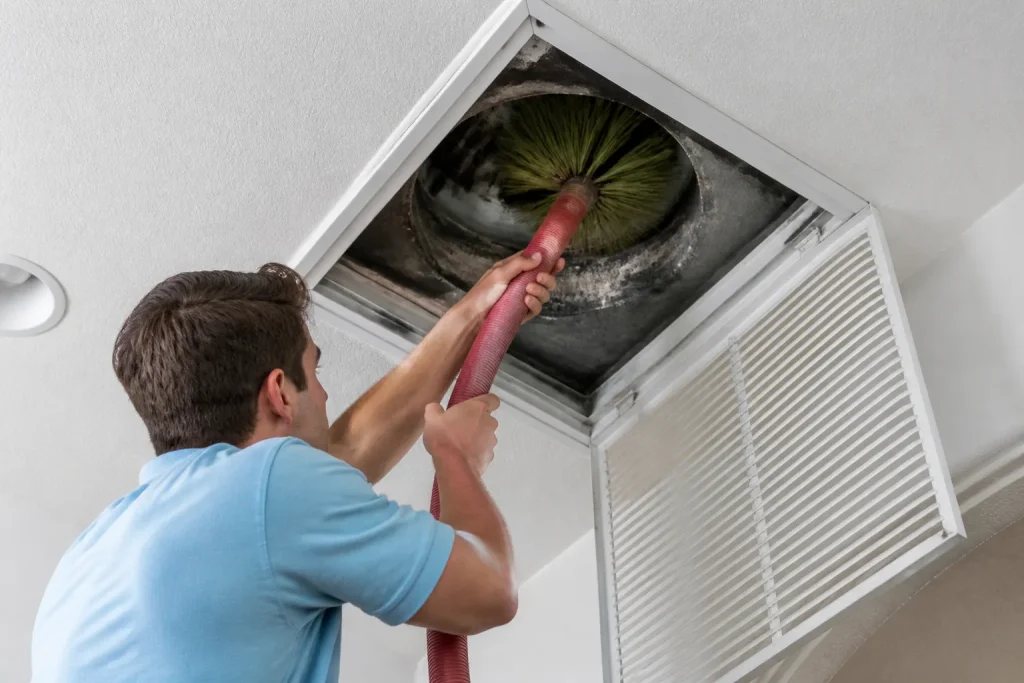
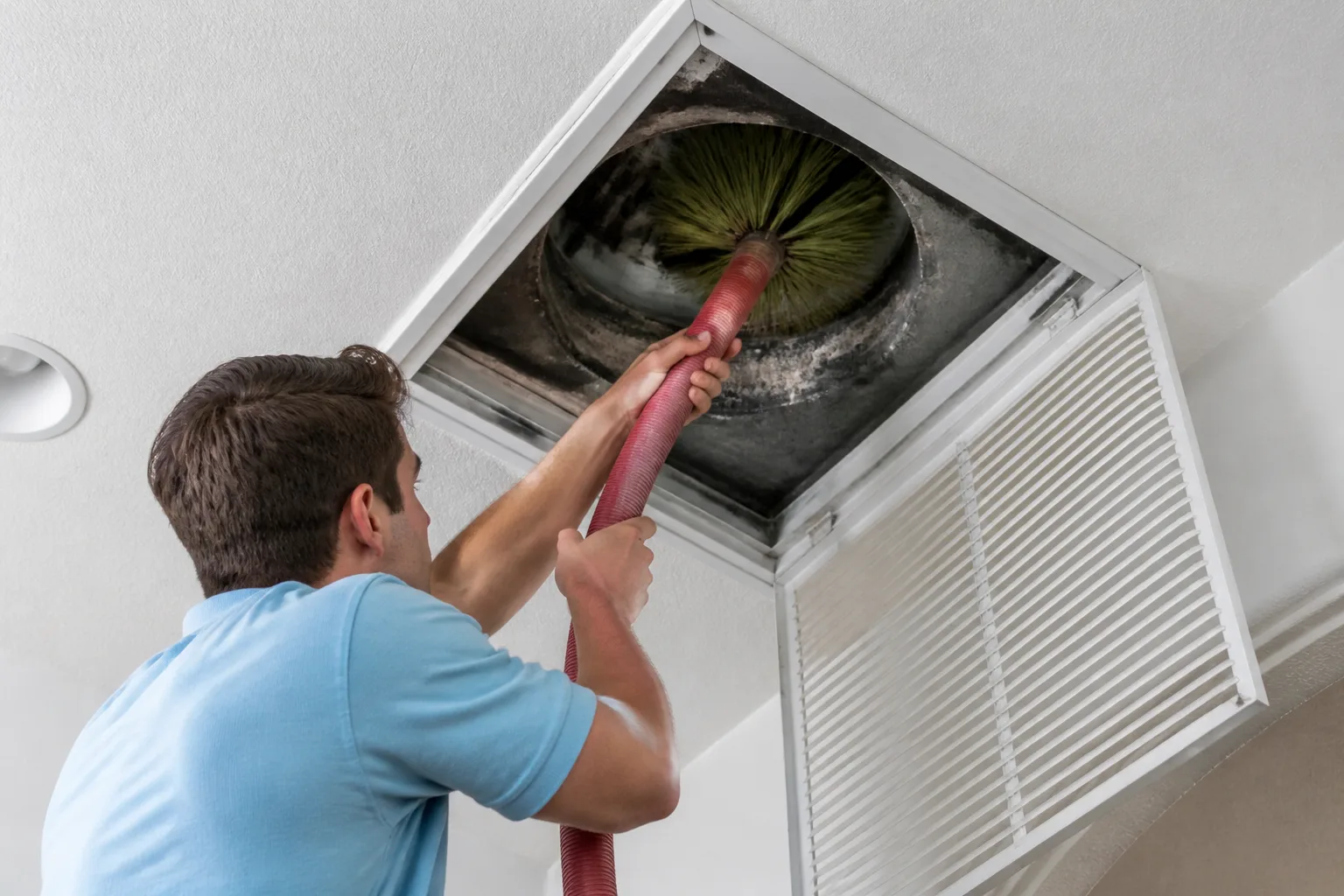
Filter changes help, but they don’t capture what’s already made it past the return and settled in the ductwork. This is where a system designed to contain the dust matters. We use Nikro industrial HEPA vacuums and Rotobrush contact cleaning, and for heavier containment situations Abatement Technologies negative-air equipment – the same approach used in restoration work – so drywall dust comes out of the home, not back into the room.
What a Technician Should Physically Find Before Recommending Cleaning
Here’s the part that matters most to us, because it’s what separates a real inspection from a sales pitch. A technician should look at the inside of the system before recommending a clean. Not take the homeowner’s description and skip straight to the truck. The inspection should cover the supply plenum and a sample of trunks and runs, the return side and filter housing, the air handler and coil, and the boots at a few registers.
Confirming signs include visible debris build-up on the duct walls beyond light dusting, a measurable deposit on the return plenum or air handler, a filter that loads up far faster than normal, and visible contamination in the flexible runs. A photo of the inside of the duct from each side is a reasonable thing to ask for. Before-and-after photos are standard for us – not a favor.
What should not trigger a cleaning recommendation on its own:
- A small amount of settled dust in a supply boot
- A dusty register cover
- A filter that needs changing
- A blower that needs a clean
- A single complaint about allergies with no visible evidence
If the ducts are clean, we say so. That’s the standard our technicians work to, and they bring up to 8 years of experience on this exact kind of inspection. When repair or sealing is the real culprit, we handle it in the same visit so the system gets fixed, not just vacuumed.
When to call a pro: if you can see debris falling from a supply, if the smell clears only when the system is off, or if a room never heats or cools the way it should, stop guessing and get it looked at. Reach out through our air duct cleaning page if you’ve already got a symptom in hand.
Related services in Issaquah: if the unit and coil are part of your concern, that’s HVAC cleaning. If your dryer is taking two cycles to finish a load, that’s dryer vent cleaning, and it’s worth a look regardless of what the ducts need.
For the full picture of what we do across the whole system, the main Issaquah Air Duct Cleaning Pros page covers cleaning, repair and sealing, sanitizing, and air quality upgrades in one visit.
The Bottom Line
Don’t judge your ductwork by the dust on your vent covers. Judge it by what comes out of a supply vent, by how evenly the house heats and cools, by the bill you can’t explain, and by what the inside of the ducts actually looks like. Post-renovation dust is the clearest case of all – even a recently serviced system can need a clean after a remodel.
If you’re in Issaquah and need help, Issaquah Air Duct Cleaning Pros offers free estimates – call (877) 792-6439. We answer 24/7. Fast dispatch from 7am to 7pm, Sunday through Friday, and we’re closed on Saturday.
Frequently Asked Questions
Look for debris discharging from supply vents, musty odor that appears only when the fan runs, uneven room temperatures, or a recent renovation that produced drywall dust. Dusty vent covers alone don’t confirm it. A proper inspection of the inside of the ductwork is what settles the question, and we do that before recommending anything. Call (877) 792-6439 for a free estimate.
Yes, usually through restricted airflow or leaks rather than the dirt itself. Debris and crushed or leaking duct runs make the system run longer to hold temperature, and leaks in an unconditioned attic space lose conditioned air outright. In Issaquah’s damp climate those leaks also pull outside air back in. Sealing and repair often deliver more savings than cleaning alone. Call (877) 792-6439 and we’ll check both.
In most cases, yes. Drywall dust and insulation fibers travel through the return system and settle in the ductwork, and a standard filter won’t catch what’s already past it. Even a system cleaned recently can need a second pass after a project. We use HEPA collection and, when needed, negative-air containment so the dust leaves the house instead of blowing into the living room. Call (877) 792-6439 to book an inspection.
It means a technician looks inside the system – supply plenum, returns, air handler, coil, and several runs – before recommending a clean. You should get a straight answer about what’s there, photo evidence from inside the ducts, and before-and-after photos when the work is done. If the ducts are clean, that’s the answer you get. Call (877) 792-6439. We answer 24/7, with fast dispatch from 7am to 7pm, Sunday through Friday.
Most homes go several years between cleanings, and some never need one. The schedule should follow evidence, not a calendar: a renovation, persistent debris at the vents, a musty smell, or a technician’s inspection finding visible build-up. If none of those apply, you can wait. Call (877) 792-6439 for a free estimate and we’ll tell you honestly whether it’s time.
Written by the team at Issaquah Air Duct Cleaning Pros.
Need Air Duct Cleaning Help?
Call Issaquah Air Duct Cleaning Pros - the local pro we connect you with is licensed and insured, with free written estimates in Issaquah.
(877) 792-6439